Battle of Benevento
The DecameronThe Battle of Benevento functions in Emilia’s tale as the hinge between Manfred’s rule and Charles I of Anjou’s takeover of Sicily. The account gives no description of the fighting itself; its emphasis falls on the battle’s political consequences, which abruptly overturn the fortunes of Arrighetto Capece and his family and launch the story’s long sequence of separation and eventual recovery.
Political setting and the battle
After the death of Frederick II, Manfred was crowned King of Sicily. Arrighetto, a Neapolitan gentleman married to Madam Beritola Caracciola, held the governance of the island in Manfred’s service. The tale places the battle within this established order: Charles I of Anjou overcame and killed Manfred at Benevento, making the defeat not merely a change of ruler but the destruction of the political position on which Arrighetto’s household depended.
The transfer of power
News of Manfred’s defeat reached Arrighetto along with the report that the whole realm had revolted to Charles. Distrusting the Sicilians’ short-lived loyalty, Arrighetto prepared to flee rather than become a subject of his lord’s enemy. His intention became known, however, and the Sicilians suddenly made him and many other friends and servants of Manfred prisoners. They delivered the captives to Charles together with possession of the island. The account thus presents the reversal through a rapid chain of defeat, revolt, attempted escape, and arrest, without specifying the battle’s military course or the mechanics of the wider change in rule.
Consequences for Beritola’s family
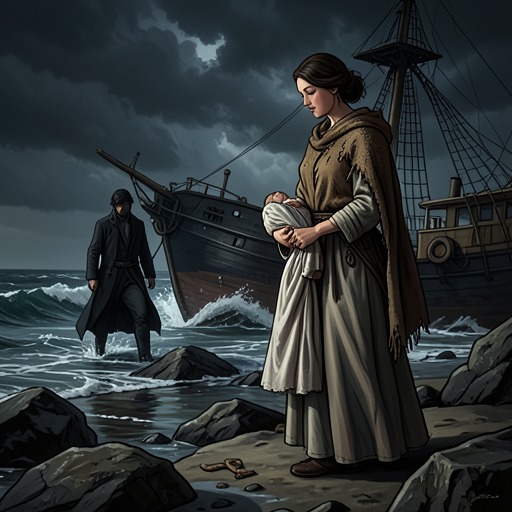
The political collapse reaches the family through uncertainty and displacement. Madam Beritola did not know what had happened to Arrighetto and feared what might follow; she abandoned her possessions and, poor and pregnant, fled by boat with her young son Giusfredi. Her intended passage toward her Neapolitan kinsfolk was diverted by the wind to Ponza, beginning the separation that shapes the family’s story. The battle therefore serves less as a narrated combat scene than as the distant cause of a domestic catastrophe: a kingdom’s change of allegiance becomes a wife’s flight, the loss of a home, and the scattering of a family.
Narrative role
Emilia introduces the episode while telling a story about Fortune’s reversals, describing the family’s subsequent bitterness and eventual joyful ending. Benevento supplies the first and largest reversal in that arc. The battle’s significance lies in the compressed transition it enables: Manfred’s death is followed by the seizure of his adherents, while Beritola’s flight carries the consequences of political defeat into the intimate sphere of marriage, parenthood, and exile.